
 MOCKO


How to Use a PSD Mockup: A Step-by-Step Guide
A beginner-friendly walkthrough of PSD mockups: what they are, how smart objects work, and how to place your design and export a realistic image in four steps.

On this page
A good mockup turns a flat logo or print file into something people can picture in the real world: on a phone screen, a T-shirt, a box or a poster. The good news is that you don't need to be a Photoshop expert to use one. If you can double-click a layer and paste an image, you can make a professional mockup in a few minutes.
Short answer: open the PSD in Photoshop, double-click the smart object layer (usually named "Your design here" or "Screen"), paste your design into the window that opens, save and close it, then export the mockup as a JPEG or PNG. On iPhone, MOCKO does the same in three taps.
This guide walks you through the whole process, from opening the file to exporting the final image, and covers the mistakes that most often make a mockup look fake.
What is a PSD mockup?
A PSD mockup is a ready-made Photoshop file that shows a real object, such as a device, a piece of clothing, packaging or a billboard, with an empty spot where your design goes. That spot is a smart object: a special layer that holds your artwork and automatically bends it to match the object's perspective, folds and lighting.
Because the shadows, highlights and textures sit on separate layers above the smart object, your design picks them up automatically. You replace one image, and the whole scene updates.
Why use mockups?
- Professional presentation. A design on a real object looks finished and believable, and it's easier to judge than a flat file on a white background.
- No photo shoot. You can show a T-shirt, a tote bag or an app before a single item is printed or a single line of code ships.
- Faster approvals. Clients and teammates understand the idea at a glance, so there's less back-and-forth.
- Reusable. Once you own a mockup, you can drop in a new design in seconds, as many times as you like.
- Consistent visuals. Using the same scenes across a portfolio, a shop or social media keeps everything looking like one brand.
How to use a PSD mockup, step by step
The steps below use Photoshop. The process is almost identical for every mockup in our mockup collection.
Step 1: Open the PSD file
Unzip the download and open the PSD in Photoshop. You'll see several layers in the Layers panel: shadows, highlights, background, maybe a few color options. Don't worry about them. You only need the layer marked as a smart object.
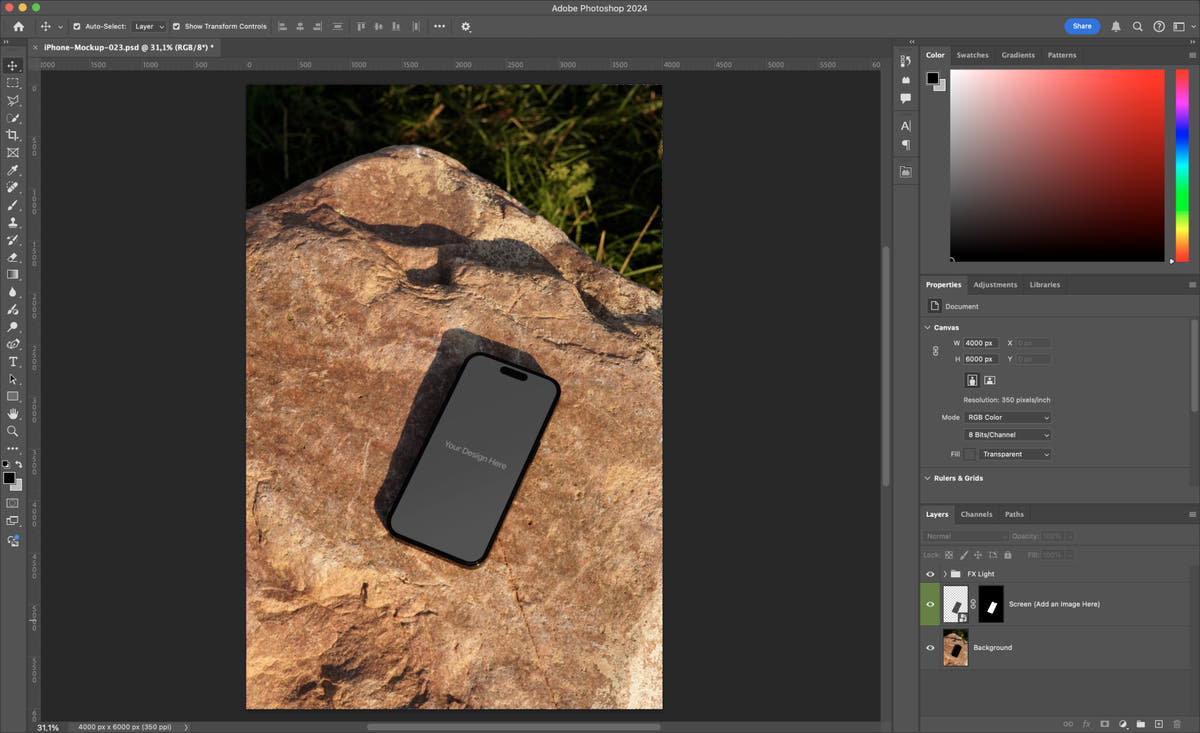
Step 2: Find the smart object layer
In the Layers panel, look for a layer with a small smart object icon on its thumbnail. It usually has a clear name like "Your Design Here", "Screen" or "Add an Image Here". Double-click the thumbnail (not the name) to open the smart object in a new tab.
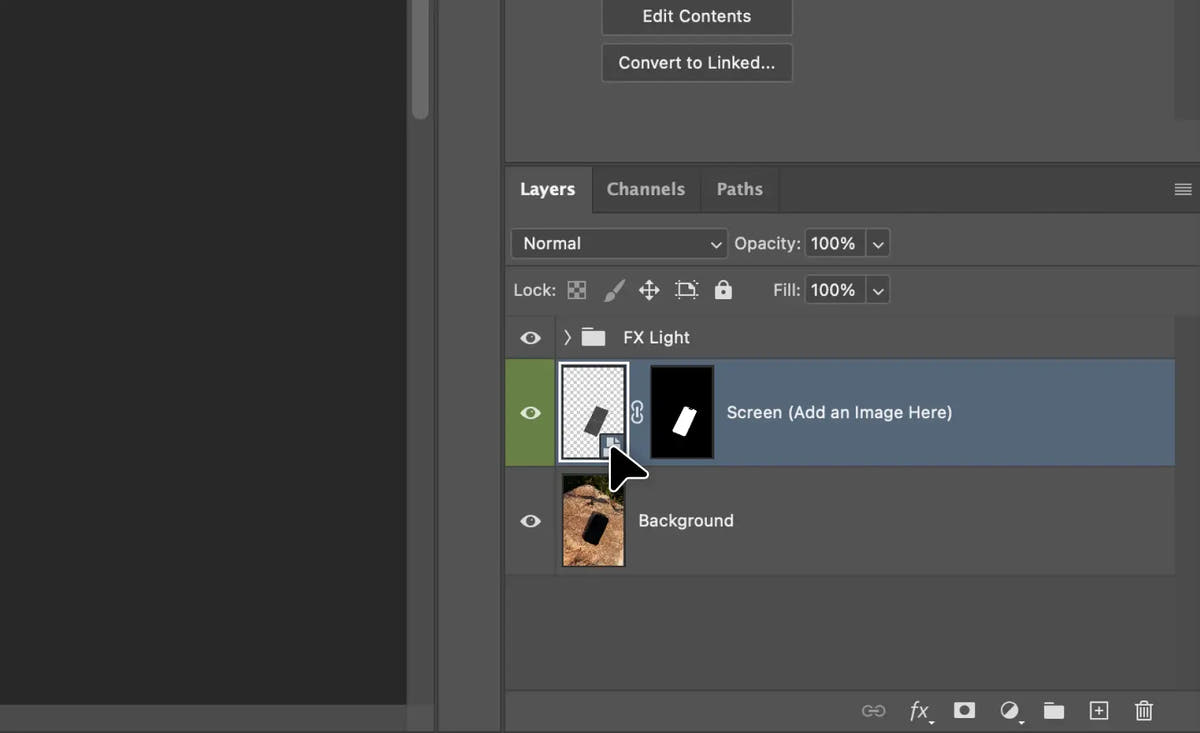
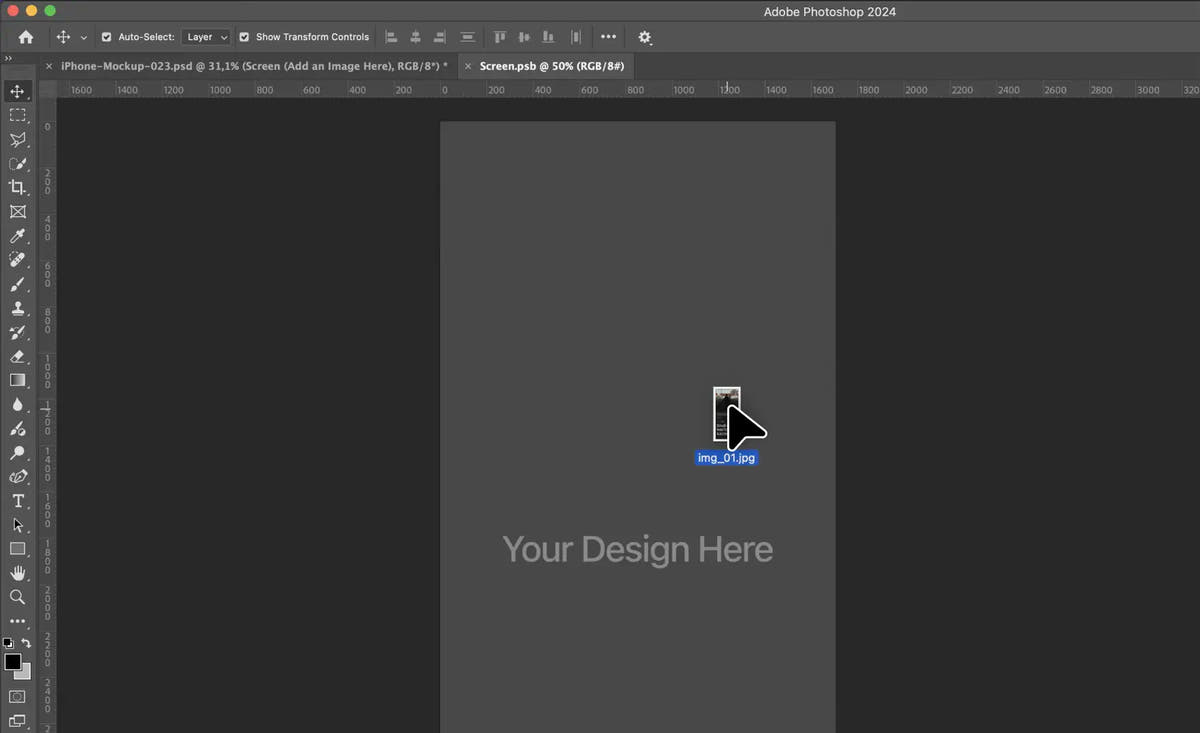
Step 3: Insert your design and save
The new tab shows a flat canvas with a placeholder. Drag your design file onto it, or paste it in, and resize it to fill the canvas. Hide or delete the placeholder layer. Then save with Cmd+S (Mac) or Ctrl+S (Windows) and close the tab.
Back in the main file, your design is now on the object, warped to fit its shape and lit by the scene. If something looks off, open the smart object again and adjust the size or position.
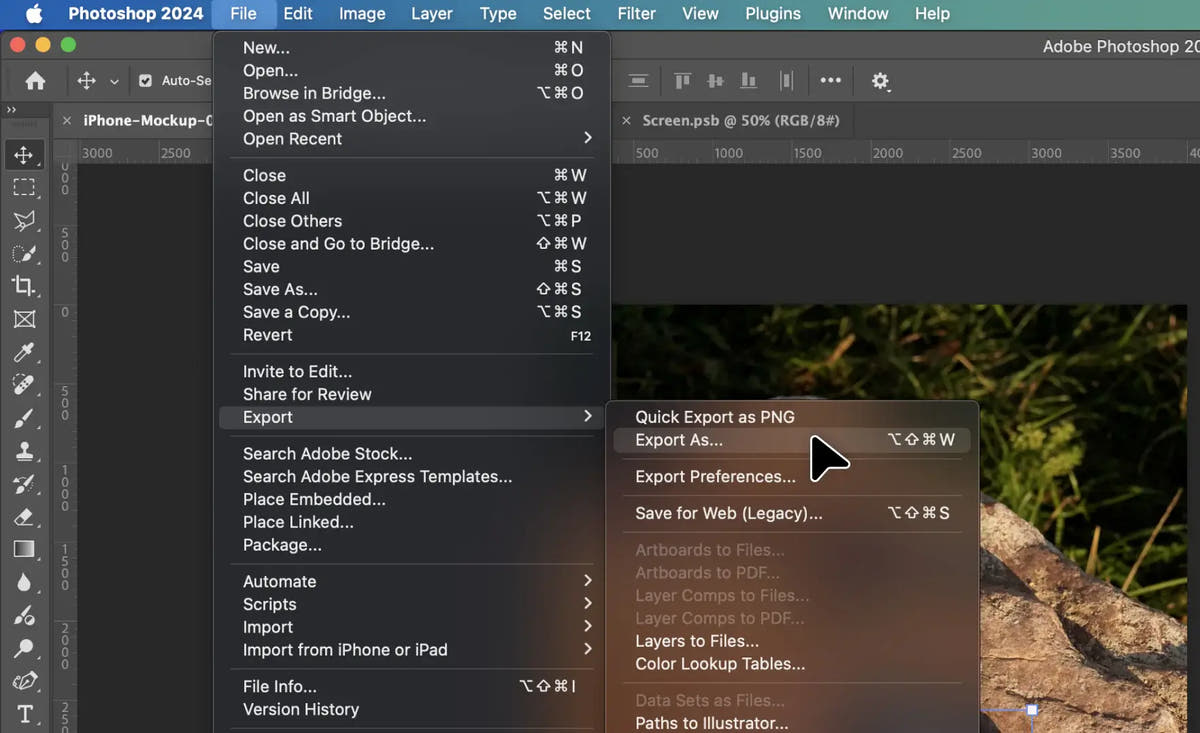
Step 4: Export the final image
When you're happy with the result, go to File › Export › Export As. Choose JPEG for photos you'll post or send, or PNG if the mockup has a transparent background. Pick the size you need and save.
That's it. Your mockup is ready for a client presentation, a portfolio, a product page or a social post.
Common mistakes to avoid
- Editing the wrong layer. Pasting your design on top of the whole mockup instead of inside the smart object means it won't follow the object's shape. Always double-click the smart object thumbnail first.
- Using a low-resolution design. If your artwork is smaller than the smart object canvas, it will look soft. Check the canvas size when you open the smart object and export your design at least that big.
- Forgetting to save the smart object. Changes only show up in the main file after you save the smart object tab.
- Ignoring the placeholder. A leftover placeholder layer can peek out from behind a design that doesn't cover the whole canvas. Hide it.
- Choosing a scene that doesn't fit. A playful sticker on a corporate desk scene, or a premium brand on a messy background, sends mixed signals. Match the scene to the audience.
- Over-editing. Extra glows, heavy filters and fake reflections usually make a mockup look less real, not more. The built-in lighting layers are there for a reason.
FAQ
Do I need Photoshop to use a PSD mockup?
Photoshop is the classic tool, and every PSD mockup works in it. If you'd rather use your phone, MOCKO opens PSD and PSB mockups on iPhone and lets you replace the smart object without a computer. Read more in How to open PSD files on iPhone.
What size should my design be?
Ideally the same size as the smart object canvas, or larger. Open the smart object and check Image › Canvas Size in Photoshop. A design that matches the canvas exactly fills it without stretching.
Can I change the color of the object, like the T-shirt or the background?
Many mockups include a color layer or a separate background layer you can change. Look for layers named "Color" or "Background" and double-click the color fill to pick a new shade.
Can I use one mockup for several designs?
Yes. That's one of the biggest advantages of smart objects. Open the smart object, swap the artwork, save and export again. Repeat for every design.
Where can I find free mockups to practice with?
Our freebies collection has free PSD mockups, and MOCKO's free plan includes 20 mockups from its library, so you can try the whole process before buying anything.
Next steps
Once you've made your first mockup, the rest gets faster. If you design apps, see how to present a mobile app using PSD mockups. If you sell clothing, try making a T-shirt mockup without Photoshop. And when you're ready for more scenes, browse all our PSD mockups.
Keep reading

Social Media Post Templates: Make Posts on iPhone in Minutes
How to choose and edit social media post templates on iPhone, keep a consistent feed, save your own templates and turn a PSD into...

PSD vs PSB: What's the Difference?
The difference between Photoshop's PSD and PSB formats, when each is used, why smart objects open as PSB, and how to open both on...

What Is a Smart Object? A Plain-English Guide for Mockups
What smart objects are, why every PSD mockup is built on them, how to edit one in Photoshop or on iPhone, and how to...